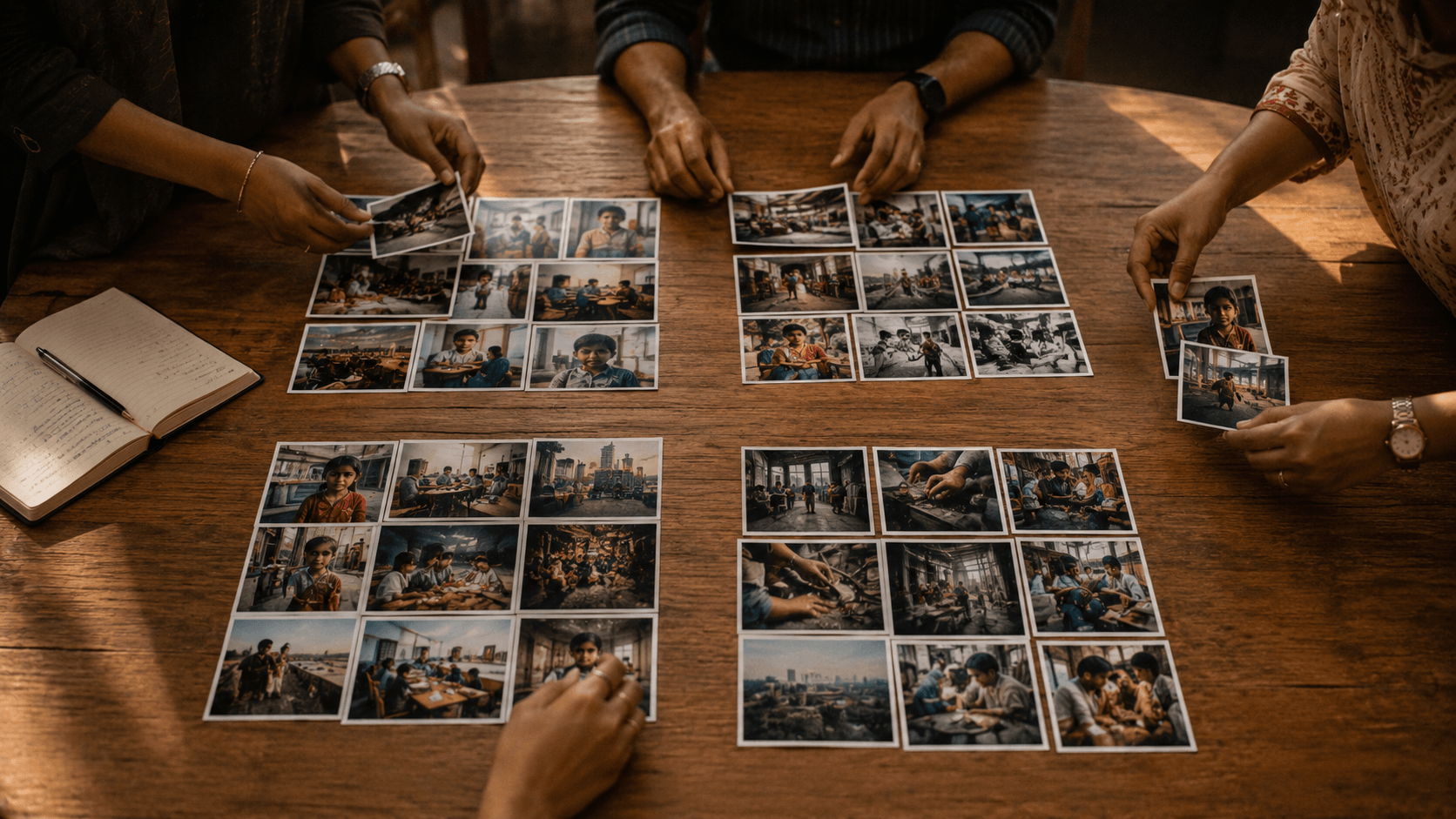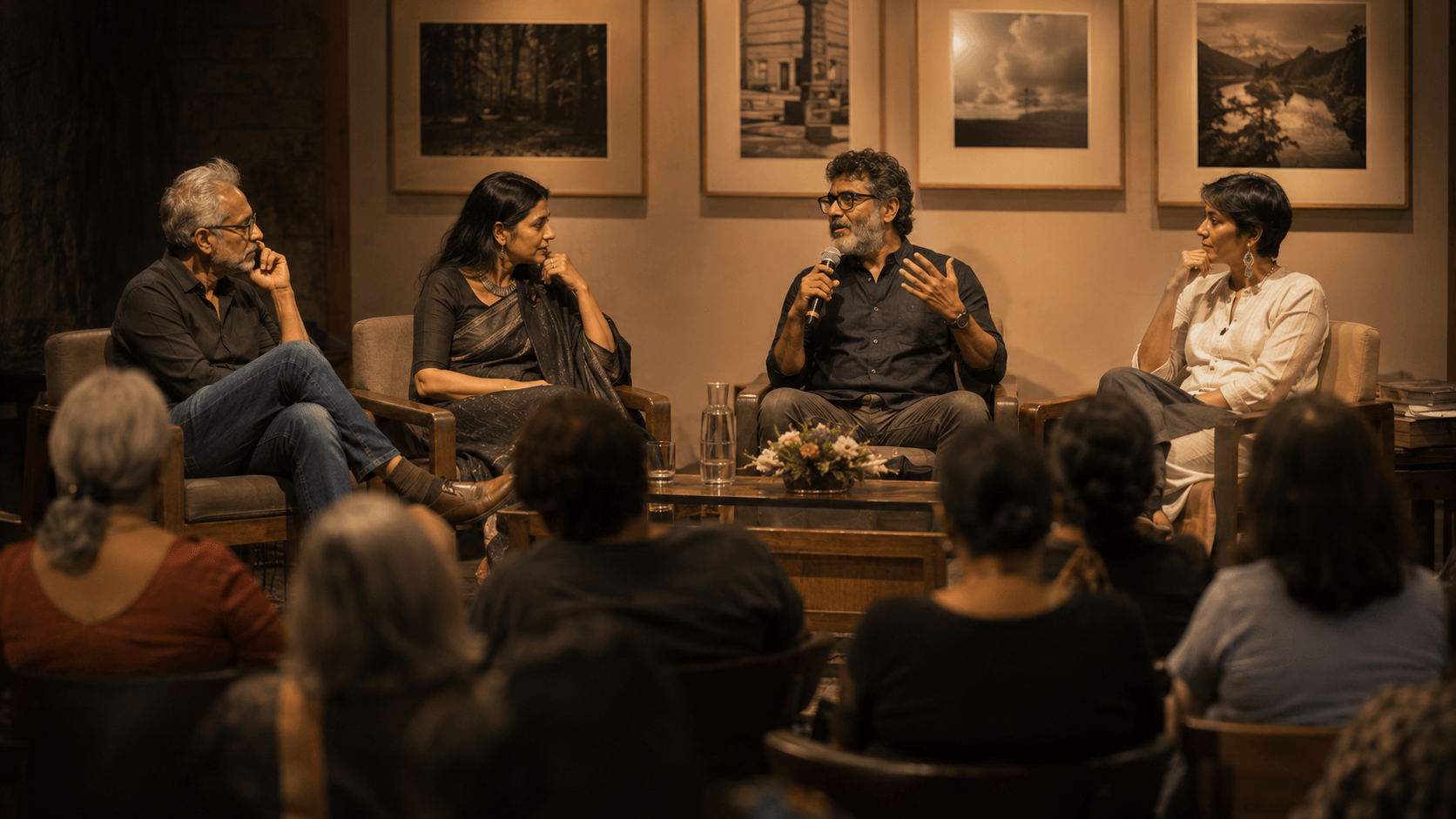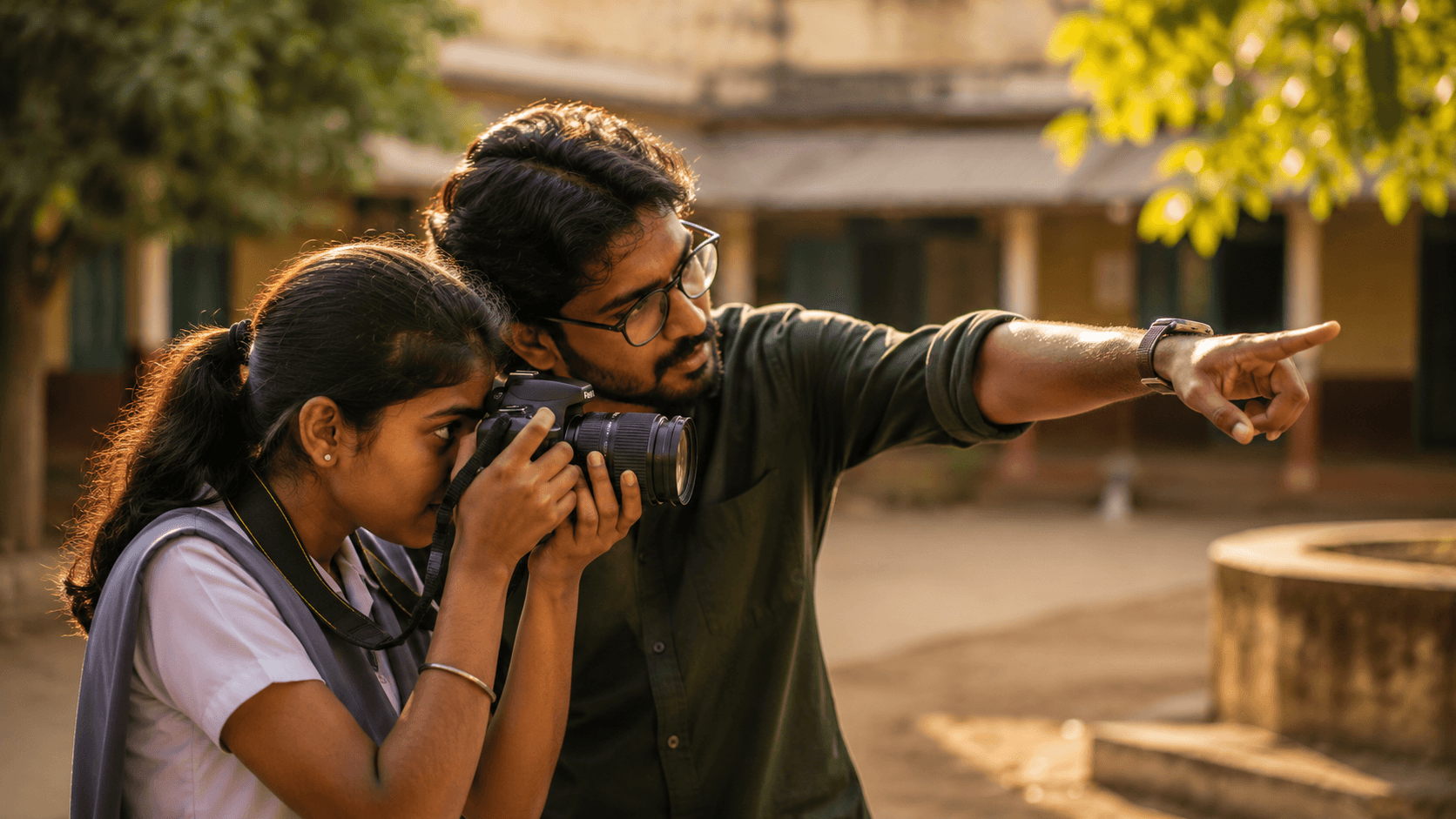

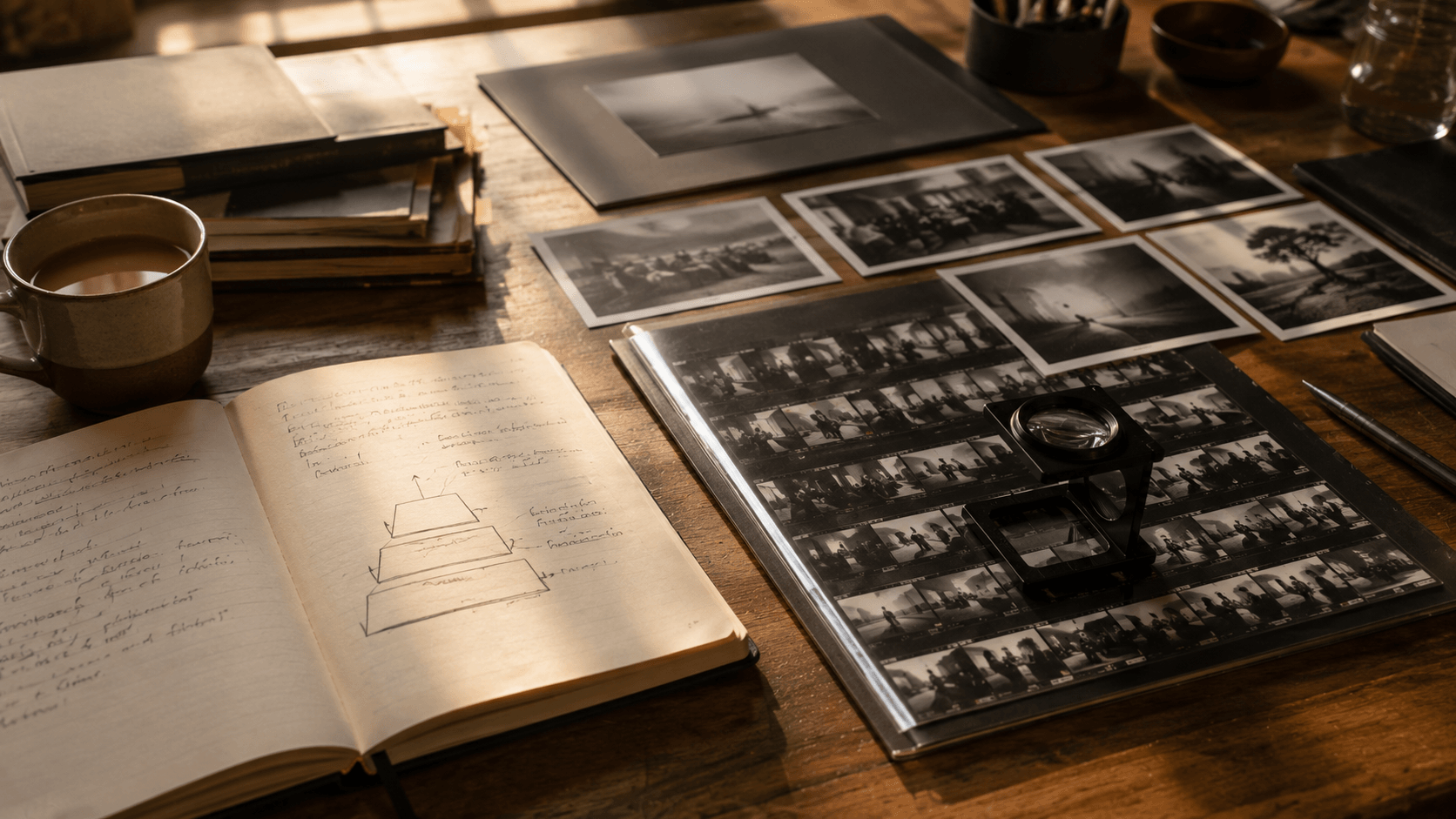
The arts have an accountability problem — not because impact is absent, but because it is so often claimed instead of shown. Here is our framework: what we count, what we track, and what we refuse to fake.

Every arts organization tells funders it ‘creates impact.’ Far fewer can explain, precisely, how they would know. That vagueness has consequences: it lets weak programs hide, forces strong ones to compete on storytelling rather than evidence, and gives diligence-minded funders a reason to route their budgets elsewhere.

We would rather be held to a standard. This essay lays out the measurement framework ZiiP Foundation applies to its own programs — offered publicly, both so our partners know exactly what they will receive, and so the sector’s bar moves a little higher.

The Honesty Principles First

Metrics without principles become theatre. Three rules govern everything we count:

  • Outputs are not outcomes. ‘We trained 300 students’ describes activity; ‘and 40 earned their first paid assignment within a year’ describes change. We report both, clearly labelled, and never dress the first up as the second.
  • Attribution is claimed cautiously. When a photographer we platformed wins a grant, our exhibition was a contribution to that outcome, rarely its sole cause. We say ‘contributed to,’ not ‘delivered,’ and our credibility compounds because of it.
  • Some things aren’t numbers — and we say so. The confidence in a teenager at their first exhibition is real and resistant to spreadsheets. We capture it through documented stories and participant testimony, labelled as qualitative evidence — never converted into invented scores.

The Framework: Three Levels, Honestly Labelled

Level 1 — Outputs: what happened

The foundation layer, counted precisely: students enrolled and completing; curriculum hours delivered; workshops held; photographers exhibited; exhibitions staged and their attendance; books and journal editions published; portfolios produced. Outputs prove execution — that funded work occurred at the promised scale.

Level 2 — Outcomes: what changed

The layer that matters most, tracked over time per program:

  • For students: skill progression evidenced by portfolio assessment; pre- and post-program surveys of confidence and aspiration; continuation into further training; first paid assignments.
  • For photographers: subsequent exhibition invitations, grants, commissions, and publications following our platforms — the career-progression trail that follows recognition.
  • For audiences and field: exhibition reach, publication circulation and citations, press coverage, and the growth of programs’ applicant pools — a proxy for rising pull and reputation.

Level 3 — Field-building: what accumulates

Hardest to measure, most important over decades: the permanent record grows (books, journal editions, archives — the case made in our publishing essay); the pipeline connects (a student entering The Young Lens Project can progress through workshops toward the platforms where careers are made); and the discourse infrastructure our field lacks gets built. We report field-building honestly as direction and milestones, not as manufactured percentages.

What Partners Actually Receive

Measurement is only useful if it reaches the people funding the work. Every ZiiP Foundation partnership includes a reporting rhythm agreed upfront: program dashboards at Level 1, outcome reports at Level 2 on a realistic timescale (careers move in years, not quarters), documented stories as qualitative evidence, and mapping into the partner’s own framework — including the SDG mapping we published earlier in this series. It is the practical delivery of what partners gain: evidence you can put in front of a board without blushing.

Why We Publish Our Own Standard

Publishing a measurement framework is a commitment device: it tells every future partner what to demand of us, and every peer organization what funders should be demanding of them. The arts do not need inflated numbers to justify support — as we argued in why CSR should fund the arts, the honest case is strong enough. What the sector needs is the discipline to make that case with evidence. Consider this our contribution — and our standing invitation to be audited against it.

Twelve Essays, One Invitation

This essay closes a twelve-part series on photography, social change, and the institutions India’s visual culture deserves — from our foundation’s five-decade story to the programs, the economics, and now the accountability. Everything we have described is real, underway, and open to partnership. If the series has earned your interest, begin the conversation. We will bring the programs, the platforms — and the framework to prove they worked.

Frequently Asked Questions

Through a three-level framework: outputs (activities delivered — students trained, exhibitions staged, books published), outcomes (changes over time — skills gained, first incomes, career progression of platformed artists), and field-building (long-term accumulation — publications, archives, pipelines), with qualitative evidence clearly labelled as such.

Outputs describe activity (300 students trained); outcomes describe change (students earning first paid assignments, photographers receiving subsequent invitations and grants). Credible impact reporting labels the two distinctly and never presents activity as change.

Much of it can — participation, completion, career progression, reach, and publications are all countable. Some genuine impact, like confidence and aspiration, is best evidenced through structured surveys and documented testimony. Honest frameworks quantify what is quantifiable and label the rest as qualitative rather than inventing scores.

Partners receive an agreed reporting rhythm: output dashboards, outcome reports on realistic timescales, documented qualitative evidence, and mapping into the partner’s own CSR/ESG framework, including SDG alignment.

Publishing the framework commits the Foundation to a visible standard, tells prospective partners exactly what evidence to expect, and raises the accountability bar for arts funding generally — strengthening the credible case for cultural investment.
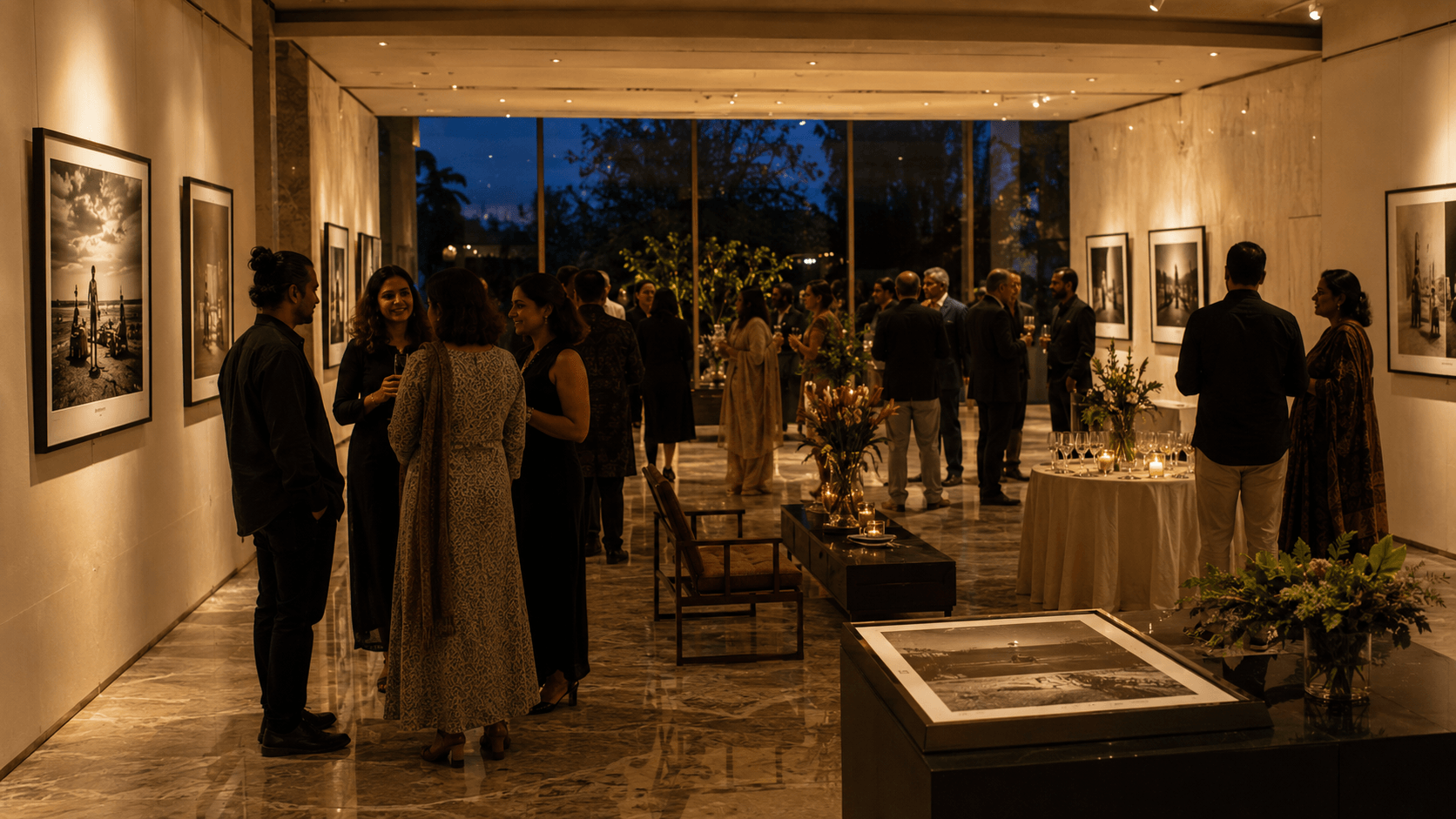

Cultural partnership is often pitched as generosity. It is better understood as strategy. A clear-eyed look at what the corporate side of the table actually receives.

There is a version of corporate arts support that everyone recognizes: a logo on a banner, a cheque at a gala, a paragraph in the annual report. It is pleasant, forgettable, and — for both sides — a missed opportunity.

Then there is partnership: a sustained association between a company and a cultural institution, in which the company’s support builds something real and the institution’s work builds something for the company in return. This essay is about the second kind — and specifically, about what the corporate partner gains. Not the warm glow; the concrete returns.

Return #1: An Association No Competitor Shares

Mainstream CSR causes are crowded rooms — worthy, but shared with every competitor’s logo. Culture is different: serious, sustained backing of the arts remains rare enough in India that the companies who do it own the association outright. As we argued in why CSR should fund the arts, ‘the company behind Indian photography’s rise’ is a position exactly one organization can occupy. Distinctiveness is the scarcest asset in brand-building, and culture still offers it.

Return #2: Rooms Money Can't Otherwise Enter

Cultural institutions convene unusual rooms: exhibition openings at national venues, international showings, symposia of leading practitioners and scholars, publication launches. These gatherings mix media, collectors, diplomats, academics, and cultural leadership — audiences that ordinary marketing cannot assemble and sponsorship banners cannot impress. A genuine partner is not a logo at these tables; it is a host. The difference in standing is everything.

Return #3: Experiences a Workforce Remembers

Employee engagement programs strain to feel meaningful. Cultural partnership solves this natively: private exhibition viewings, artist walkthroughs, photography workshops for teams, volunteering at education programs, invitations to openings. These are experiences employees photograph, share, and remember — and they signal something about the employer’s character that a wellness webinar never will. For talent brands competing on culture in the other sense of the word, this is quietly powerful.

Return #4: Recognition That Outlives the Fiscal Year

Most sponsorship recognition dies with the event’s press cycle. Cultural partnership, done properly, is built on permanence — as we detailed in publish, archive and document: a partner’s name in a published book sits in libraries and collections for decades; support credited in a journal is citable indefinitely; an endowed program carries its backer’s name through every cohort. Culture is one of the few fields where recognition compounds rather than expires.

Return #5: A Stake in the Story

The deepest return is narrative. Companies spend heavily to associate with innovation, excellence, and national progress — usually by claiming it in advertising. Cultural partnership lets a company genuinely participate in it: when the Women in Photography Project places Indian women photographers on international walls, when India’s photography discourse convenes its first serious symposium, the partners behind those milestones are not adjacent to the story of Indian culture’s rise. They are characters in it. That is a claim no campaign can manufacture.

What Separates Partnership from Sponsorship

If the returns above sound better than what a logo-on-banner arrangement delivers, that is because the structure differs. In our experience, real cultural partnership has four traits:

  • Multi-cycle horizon — commitment across editions or years, letting association deepen and compound rather than reset annually.
  • Program alignment — support matched to what the company authentically cares about (education, gender equity, skilling, heritage), so the story is coherent inside and out.
  • Co-created moments — employee programs, hosted evenings, shared milestones, designed together rather than bolted on.
  • Honest accounting — agreed outcomes and transparent reporting, so the partnership stands on evidence, not sentiment.

The Seat Is Open

ZiiP Foundation builds its partnerships this way: long-horizon, program-aligned, co-created, and honestly reported — across exhibitions, education, publishing, and discourse. If your organization is ready to trade the banner for the table, start a partnership conversation with us. The story of Indian photography’s next decade is being written now; its partners are being chosen the same way.

Frequently Asked Questions

Core returns include distinctive brand association in an uncrowded space, access to high-value convenings (openings, symposia, launches), meaningful employee engagement experiences, long-lived recognition through publications and archives, and authentic participation in cultural milestones.

Sponsorship is typically single-event and logo-based, with recognition that ends with the press cycle. Partnership is multi-cycle and program-aligned, with co-created engagement and recognition embedded in durable outputs — books, journals, archives, and ongoing programs.

Partnership avenues include exhibition journeys in India and internationally, photography education for government-school students, symposiums and discourse platforms, and publishing — books, the ZiiP Journal, and archival projects.

Partners can offer employees private exhibition viewings, artist walkthroughs, photography workshops, and volunteering roles in education programs — experiences with genuine cultural substance that strengthen employer brand and internal pride.

Through the contact page at ziipfoundation.org. Conversations typically begin by matching the company’s CSR or brand priorities to a program area, then defining scope, outcomes, and reporting together.

An exhibition lives for weeks. A book lives for generations. Inside the least glamorous, most consequential work a photography foundation does.

There is a moment at the end of every exhibition that outsiders rarely see. The visitors have gone, the reviews are filed, and the photographs come down off the walls. In that moment, a question hangs in the empty gallery: what, of all this, remains?

For most cultural events, the honest answer is: memories, a hashtag, and a few press clippings. We think that answer is not good enough — and the difference between organizations that accept it and those that don’t is the difference between staging events and building a field.

The Impermanence Problem

Cultural work in India suffers from a quiet structural weakness: it is event-shaped. Festivals conclude, exhibitions close, workshops end — and with them, most of what was created evaporates. The photographer’s moment of visibility passes; the curatorial thinking is never written down; the audience’s encounter leaves no citable trace.

This impermanence has compounding costs. Artists rebuild their credibility from zero with every new opportunity, because nothing durable carries their previous recognition forward. Scholars and curators — Indian and international — find little published record of Indian photography to cite, teach, or acquire. And the field’s collective memory resets, over and over, instead of accumulating.

The remedy is unglamorous and essential: publish, archive, document — deliberately, as core work rather than afterthought.

The Book: A Career's Hardest Currency

In photography, the photobook is not merchandise; it is professional infrastructure. A published book enters libraries, collections, and bibliographies. It travels to rooms its photographer will never visit, sits on curators’ shelves for decades, and converts a temporary exhibition into a permanent, citable fact of an artist’s career. This is why every edition of the Women in Photography Project culminates in a published volume of its 25 photographers’ work — so that when the walls are cleared after the journey from Farleys to NGMA, the record does not clear with them.

For a photographer, the difference is concrete: ‘I exhibited in 2026’ is a memory; a book is evidence, presentable in every grant application, gallery pitch, and commission conversation for the rest of a career.

The Journal: A Field Thinking in Public

If books preserve the work, journals preserve the thinking. The ZiiP Journal exists to give Indian photography what mature fields possess: a running written record of its ideas — essays, interviews, criticism, and reflection that turn scattered conversations into accumulated knowledge. We made the case for India’s photography discourse two weeks ago; a journal is discourse given permanence, quotable and teachable long after any symposium ends.

The Archive: A Nation's Visual Memory

The longest horizon belongs to the archive. Photographs are primary documents of their time — how people lived, worked, dressed, celebrated, and struggled — and their survival is never automatic. Prints fade, files scatter, hard drives fail, and estates disperse. Building digital archives of exhibited work, student portfolios, and program documentation is slow, technical, invisible work. It is also how a foundation ensures that the visual record it helps create remains available to the researchers, educators, and storytellers of 2050 and beyond.

What Permanence Means for a Funder

Here is the part that matters for partners and CSR leaders: permanence changes the economics of cultural funding.

  • Recognition with a long tail: a supporter’s name in a published book or journal is encountered for decades — in libraries, collections, and citations — not just during an event’s press cycle.
  • Assets, not moments: funding that produces books, journals, and archives leaves countable, ownable artifacts that continue delivering value after the grant period closes.
  • Compounding returns: each published edition raises the platform’s authority, which raises the value of every subsequent edition — permanence is how cultural investment compounds.

Help Us Build What Lasts

Anyone can fund an event; the rarer, wiser investment is in what outlives it. Publications, journals, and archives are the least photographed part of a photography foundation’s work — and the part history will thank us for. If your organization wants its cultural investment to be legible in ten years, not just ten days, partner with ZiiP Foundation and help us build the permanent record of Indian photography.

Frequently Asked Questions

A published photobook is durable professional evidence: it enters libraries and collections, is cited by curators and scholars, and carries a photographer’s recognition forward for decades — unlike exhibitions, which end. In photography, books function as career infrastructure rather than merchandise.

The ZiiP Journal is ZiiP Foundation’s publishing platform for writing on photography — essays, interviews, criticism, and reflection — building a permanent written record of Indian photography’s ideas and conversations.

Photographs are primary historical documents, and their survival is not automatic: prints deteriorate and digital files scatter. Archives preserve a society’s visual memory, keeping images available for future researchers, educators, and storytellers.

Yes. ZiiP Foundation’s programs are designed to culminate in publications — including a published volume documenting each edition of the Women in Photography Project — alongside the ZiiP Journal and ongoing archival documentation of its exhibitions and programs.

Organizations can support the production of books and journal editions, digitization and archiving of photographic work, and documentation of exhibitions and education programs by partnering with ZiiP Foundation via ziipfoundation.org.

CSR and ESG teams report in the language of the Sustainable Development Goals. Here is how photography programs speak it fluently — with the mapping laid out for your own frameworks.

Somewhere between conviction and commitment, every corporate funding decision passes through a spreadsheet. Program officers may be moved by a cause, but boards and ESG reports ask a standardized question: which goals does this serve, and how will we account for it?

Arts organizations often stumble at exactly this step — not because the alignment is weak, but because it is rarely articulated in the funder’s reporting language. This essay does that translation for photography programs, mapping them to the UN Sustainable Development Goals that most Indian CSR and ESG frameworks track. Feel free to lift this mapping directly into your own assessments; that is what it is for.

SDG 4 — Quality Education

SDG 4 calls for inclusive, equitable, quality education and lifelong learning opportunities — with explicit attention to relevant skills for employment and to learners in vulnerable situations.

Photography education is a direct contribution: structured curriculum, technical and creative skill-building, and critical visual literacy — an increasingly essential competency in an image-saturated world. When it is delivered free inside government schools, as The Young Lens Project does, it reaches precisely the learners the goal prioritizes, adding creative education where the system offers none.

  • What to report: students enrolled and completing, curriculum hours delivered, schools reached, portfolios produced, progression to further training or income.

SDG 5 — Gender Equality

SDG 5 targets the end of discrimination against women and girls, their full participation, and equal opportunity in economic and public life — including leadership and representation.

The gender gap behind the camera is a participation gap in public and economic life: fewer platforms, fewer commissions, fewer positions of visibility. The Women in Photography Project addresses it structurally — international and national exhibition platforms, published books, and career development for 25 Indian women photographers per edition — converting an equity commitment into named artists, national gallery walls, and documented career outcomes.

  • What to report: women photographers platformed, exhibitions and audiences reached, publications produced, subsequent opportunities (invitations, grants, commissions) generated.

SDG 8 — Decent Work and Economic Growth

SDG 8 promotes productive employment and decent work — with specific attention to youth employment, and to development-oriented policies that support creativity and innovation.

The creative economy is one of the clearest arenas where culture and employment meet. As we detailed in photography as a career pathway, photography offers market-linked skills, low entry costs, and quick routes to first income across e-commerce, events, media, and content. Programs that train young people in professional photography are workforce development for a growth sector — and squarely within this goal’s scope.

  • What to report: participants gaining employable skills, first assignments or income milestones, mentorship hours, pathways into creative-sector work.

SDG 10 — Reduced Inequalities

SDG 10 seeks to empower and promote the social and economic inclusion of all, irrespective of economic or other status.

Inequality has a visual dimension that this goal’s language captures precisely: some communities author the public image; others only appear in it. Photography programs that put cameras, training, and platforms in underrepresented hands — students from underserved communities, women artists, voices outside the metropolitan mainstream — work on inclusion at the level of representation itself, alongside the economic inclusion their skills enable.

  • What to report: participation from target communities, first-generation creative professionals supported, diversity of voices exhibited and published.

One Program, Several Goals — Honestly Accounted

A caution we practice ourselves: SDG mapping should clarify, not inflate. The honest structure is one primary goal per program with secondary contributions noted — e.g., The Young Lens Project reports primarily under SDG 4 with contributions to 8 and 10; the Women in Photography Project primarily under SDG 5 with contributions to 8 and 10. This keeps reporting credible and audit-friendly — and credibility, as we argued in why CSR should fund the arts, is what lets cultural funding claim its rightful place in serious portfolios.

Bring the Mapping Into Your Portfolio

If your CSR or ESG framework tracks Goals 4, 5, 8 or 10 and your portfolio lacks a cultural program that serves them, the gap is now easy to describe — and easy to fill. Partner with ZiiP Foundation and we will design the program, the outcomes, and the reporting together, in your framework’s own language.

Frequently Asked Questions

Yes. Arts and cultural programs contribute measurably to several Sustainable Development Goals — most directly SDG 4 (quality education) through structured creative education, SDG 5 (gender equality) through platforms for women artists, SDG 8 (decent work) through creative-economy skill development, and SDG 10 (reduced inequalities) through inclusion of underrepresented communities.

Photography education delivers structured curriculum, employable creative-technical skills, and visual literacy. Programs offered free in government schools — like ZiiP Foundation’s Young Lens Project — extend quality educational opportunity to learners who otherwise lack access to creative education.

Exhibition, publication, and career-development platforms for women photographers — like ZiiP Foundation’s Women in Photography Project — address the participation and representation gap in cultural and economic life, producing verifiable outcomes: artists platformed, works published, and subsequent professional opportunities.

Practical indicators include participants trained and completing, demographic reach, exhibitions and audience numbers, publications produced, artist career outcomes (invitations, grants, commissions), and progression of students into further training or creative-sector income.

Yes, but best practice is one primary goal per program with secondary contributions noted transparently. This keeps SDG reporting credible and auditable. ZiiP Foundation structures its own program reporting this way and designs partner reporting to match the funder’s framework.

A nation with one of the world’s richest photographic histories has remarkably few rooms where photography is actually discussed. That absence has costs — and a remedy.

Here is a strange asymmetry. India produces extraordinary photographers, hosts enthusiastic festivals, and consumes images at a scale few societies match. Yet ask where in India photography is seriously debated — its ethics examined, its history studied, its future contested — and the answers thin out fast.

Literature has its festivals of ideas. Cinema has its critical culture, its retrospectives, its schools of thought. Photography — arguably the most pervasive visual medium in Indian life — has celebration without examination. We exhibit images; we rarely interrogate them.

Why Discourse Is Not a Luxury

It’s tempting to file ‘discourse’ under academic indulgence. The opposite is true: critical conversation is infrastructure, and its absence shows up in concrete ways.

Fragmentation wastes the ecosystem

India’s photography conversation is scattered — academics in one silo, gallery circles in another, working professionals in a third, with little structured exchange between them. Knowledge that should compound instead evaporates. Emerging photographers, meanwhile, find no room where they can encounter critical debate, professional networks, and global perspectives at once.

Underrepresentation follows silence

Global photography discourse — the conferences, journals, and juries where reputations and canons are made — has long under-featured Indian voices, despite the country’s photographic riches. A discourse gap at home becomes a representation gap abroad: if India doesn’t convene the serious conversation about its own photography, others will hold it elsewhere, without us. This is a thread that runs through the story behind ZiiP Foundation — five decades spent carrying Indian photography into exactly those global rooms.

The questions are getting harder

And the timing could not be less forgiving. AI-generated imagery, algorithmic feeds, deepfakes, surveillance, the collapse of trust in what a photograph even is — the ethics of the image have become urgent civic questions, not studio talk. A society that runs on images but never examines them is, as we argued in photography as a tool for social change, handing enormous power to whoever shapes those images unexamined.

What Serious Discourse Looks Like

A real discourse platform is not a bigger festival. It has a different anatomy:

  • Curated, not crowded — a deliberately composed room of photographers, scholars, curators, educators, and cultural leaders, sized for genuine exchange rather than audience volume.
  • Cross-silo by design — practitioners debating with academics, veterans with emerging voices, Indian perspectives with international ones.
  • Unafraid of the hard questions — consent and the photographer’s gaze; who owns an image; representation and power; beauty’s place in an age of crisis; what AI does to truth.
  • Built to outlast the weekend — proceedings that become publications, connections that become collaborations, questions that become research.

What We're Building

This anatomy is not hypothetical for us. ZiiP Foundation is developing ZiiP Folder — a curated symposium convening approximately one hundred photographers, artists, researchers, curators, educators, and cultural leaders for two days of keynotes, panels, debates, and critical reflection on photography’s relationship with ethics, representation, technology, and society. It is designed to be the serious intellectual room Indian photography has lacked — with the ZiiP Journal carrying its conversations beyond the venue. Full details will be announced soon; this essay is, in part, the argument for why it must exist.

It also completes a structure. Access (our school programs), skill (workshops), recognition (the Women in Photography Project), and now discourse — the fourth rung, where a field learns to think about itself.

Convene With Us

Serious rooms need serious backers: organizations that understand the value of being present where a field’s future is debated, not just where its outputs are displayed. If your institution wants to help convene India’s photography conversation — and be identified with it — partner with ZiiP Foundation. The room is being built; the table has seats.

Frequently Asked Questions

Photography discourse is the structured critical conversation around photography — its ethics, history, aesthetics, and social role. It matters because it sets standards, builds knowledge, shapes representation in global canons, and equips a society to think critically about the images that saturate its life.

India has photography festivals and gallery events, but dedicated platforms for critical photography discourse remain rare. ZiiP Foundation is developing ZiiP Folder, a curated symposium designed specifically for serious exchange among photographers, scholars, curators, and cultural leaders.

ZiiP Folder is a curated two-day symposium being developed by ZiiP Foundation, convening approximately one hundred participants for keynotes, panels, and debates on photography’s relationship with ethics, representation, technology, and society. Full details will be announced on ziipfoundation.org.

Questions of consent, representation, image ownership, AI-generated imagery, and manipulation now affect everyone who makes or consumes images. Serious examination of these questions helps photographers work responsibly and helps society maintain trust in the visual record.

Institutions and funders can support the development of India’s photography discourse — including symposiums and publications — by partnering with ZiiP Foundation through the contact page at ziipfoundation.org.

India is producing more images than at any point in its history — and needs more professionals to make them. The career pathway is real. The question is who gets access to it.

Somewhere in India today, a wedding is being photographed, a product catalogue is being shot, a news event is being documented, a brand campaign is being filmed, and a restaurant is paying for pictures of its food. Multiply that by every city, every day, and a truth emerges that career counselors have been slow to catch up with: photography is not a risky artistic gamble. It is a working profession embedded in one of the economy’s fastest-growing sectors.

The Demand Side: An Economy That Runs on Images

India’s creative economy — spanning media, entertainment, advertising, design, and digital content — has become a significant and expanding source of employment, and images are its raw material. Consider where professional photography is bought every single day:

  • Commerce: every online listing, menu, storefront, and property page needs professional images; e-commerce alone has industrialized product photography.
  • Celebrations: India’s wedding and events industry sustains one of the world’s largest markets for photography and filmmaking services.
  • Media and brands: journalism, advertising, corporate communications, and the endless content pipelines of social platforms all commission photography continuously.
  • Adjacent skills: the same visual training opens doors to editing, videography, drone work, art direction, and content strategy — a family of livelihoods, not a single job.

Photography also has an unusually merciful cost curve: capable cameras are more affordable than ever, smartphone photography lowers the entry step further, and a first paying assignment can arrive within months of serious learning — a faster route from training to income than most technical fields can claim.

The Supply Side: A Pathway With a Gate

Here is the paradox: while demand for visual professionals grows, the pathway into the profession remains gated — not by aptitude, but by circumstance. Formal photography education is scarce and concentrated in private institutions. Mentorship networks cluster around those already inside. And in millions of households, photography is simply never presented as a career at all.

The result is a profession drawing on a fraction of the talent pool it could — and a generation of young people locked out of livelihoods that their own visual fluency already suits them for. India’s creative economy has a talent pipeline problem, and it is a solvable one.

Opening the Gate: What It Takes

A career pathway becomes real for a young person when four things line up — and each one can be deliberately built:

1. Early exposure

A teenager cannot aspire to a profession they’ve never seen. Structured school-age programs — like The Young Lens Project, which brings free photography education into government schools — make the career visible at the age when ambitions form.

2. Skills with standards

The market pays for professional craft: composition, lighting, reliability, ethics. Serious curriculum and honest critique — not just equipment access — are what separate a hobbyist from an employable image-maker.

3. Proof of work

In creative fields, the portfolio is the resume. Programs that end with a body of work and a public showing hand students their first professional asset and their first line of credibility.

4. Visible ceilings being broken

Role models complete the map. When the Women in Photography Project places Indian women photographers on national and international gallery walls, it isn’t only recognition for 25 artists — it is proof, visible to every aspiring young photographer, of how high the pathway goes.

Why This Belongs on the Skilling Agenda

For CSR and workforce-development funders, the implication is direct: photography education is skill development, in the fullest sense that term carries — market-linked, income-generating, and scalable. It simply happens to build creative capability at the same time. We’ve made the broader argument in why CSR should fund the arts; the creative-economy lens sharpens it into a workforce case that any skilling portfolio can recognize.

It is also, for the story behind ZiiP Foundation, the long game: an India whose creative industries draw talent from every community — not just the ones that could always afford the entry fee.

Build the Pipeline With Us

The demand exists. The talent exists. What’s missing is the bridge between them — and bridges are built with funding, mentors, and platforms. Partner with ZiiP Foundation to open photography’s career pathway to the young people India’s creative economy is waiting for.

Frequently Asked Questions

Yes. India’s creative economy generates continuous demand for professional photography across e-commerce, weddings and events, media, advertising, and digital content. The field offers multiple income streams, relatively low entry costs, and adjacent career paths in videography, editing, and content production.

The creative economy encompasses industries built on creativity and intellectual property — media, entertainment, design, advertising, arts, and digital content. It is a significant and growing contributor to employment in India, with photography embedded across nearly all of its sectors.

Core skills include composition, lighting, camera craft, and post-processing, along with professional reliability, client communication, and ethical practice (consent and representation). A strong portfolio typically matters more than formal certification.

ZiiP Foundation builds the pathway end to end: The Young Lens Project introduces photography in government schools; workshops and portfolio programs develop skills; and platforms like the Women in Photography Project provide the exhibitions and publications where careers gain recognition.

Yes. Photography education aligns with recognized skill-development and education categories of CSR in India, while also serving creative-economy workforce goals. Organizations can support school programs, workshops, and exhibitions through ZiiP Foundation.

Photography education has quietly become a privilege. One initiative is working to make it a possibility — for the students who need it most.

In every Indian city, there are two groups of teenagers growing up in the same visual world. Both scroll the same feeds, watch the same reels, live surrounded by the same flood of images. But only one group is ever taught to make images deliberately — to frame, to compose, to tell a story with light. The other group appears in photographs far more often than it takes them.

The difference between the two isn’t curiosity or talent. It is access: to equipment, to mentors, to the simple suggestion that photography could be theirs — as a voice, and as a livelihood.

Closing that access gap is the purpose of The Young Lens Project, ZiiP Foundation’s photography education initiative for teenagers in government schools.

The Gap We're Addressing

Structured creative education is close to absent in most government schools. The consequences are specific and cascading:

  • Creative skills go untaught — students graduate visually fluent as consumers but never as creators.
  • Photography is invisible as a career — few students, and fewer families, know that India’s creative economy offers real, growing livelihoods behind the camera.
  • Mentorship never arrives — without a working photographer in their world, students have no map from interest to profession.
  • The visual record stays lopsided — communities that are constantly photographed by outsiders rarely get to author their own image.

That last point deserves a pause. A society’s picture of itself is drawn by whoever holds its cameras. When entire communities are only ever subjects — never photographers — the national album is written in someone else’s hand.

How the Project Works

The Young Lens Project is designed as a complete journey rather than a one-off workshop — because a single inspiring afternoon changes a mood, while a structured program changes a trajectory.

A multi-week curriculum, inside the school

Delivered over six to eight weeks of regular sessions, the program is free for every participant and travels to the students rather than asking them to find it. The curriculum moves from the basics of composition, light, and framing, through the mechanics of the camera, into storytelling with images — and, importantly, into the ethics of photography: consent, dignity, and representation, taught from the very first frames a student makes.

Mentorship by working photographers

Sessions are led by young professional photographers — mentors close enough in age and background to be believable, living proof that the path exists. Guided assignments and feedback sessions turn instruction into practice, and practice into confidence.

A portfolio, and a public wall

Every participant builds a personal portfolio — for many, the first creative body of work they have ever owned. Each cohort culminates in a public exhibition of student photography, attended by families, schools, and community stakeholders. The moment a teenager watches strangers study a photograph they made is, reliably, the moment the program’s real work happens.

What We Expect This to Achieve

The project’s initial phases aim to train several hundred students across major Indian cities, with each cohort producing exhibition-ready portfolios and public showcases of youth perspectives. But the outcomes we care most about run deeper than counts:

  • A generation of first-generation image-makers who see photography as a viable path — feeding India’s creative industries with talent from far beyond the usual pipelines.
  • Confidence that transfers — the self-assurance built by public exhibition follows students into every classroom and interview that comes after.
  • A more complete visual record — new authors, from new places, adding their view to the national album.

This is photography as a tool for social change at its most literal: change who makes the images, and you change what a society sees.

One Ladder, Connected

The Young Lens Project is the first rung of the ladder ZiiP Foundation is building across all its programs — access, then skill, then recognition, then discourse. A student who starts here can grow through the Foundation’s workshops and portfolio programs, and one day stand where the Women in Photography Project photographers stand today: on national gallery walls. That continuity — a genuine pipeline rather than isolated interventions — is what makes each rung worth funding.

Put a Camera in the Next Pair of Hands

Free programs are never free to run: cameras, mentors, printing, exhibitions — each element is a funded choice. We’ve made why CSR should fund the arts the subject of its own essay; this project is that argument made human, one student at a time. If your organization funds education, skilling, or youth opportunity, partner with ZiiP Foundation — and be there at the exhibition when the first cohort’s work goes up on the wall.

Frequently Asked Questions

The Young Lens Project is ZiiP Foundation’s free photography education initiative for teenagers in government schools across Indian cities. It combines a multi-week curriculum, mentorship by young professional photographers, portfolio development, and public exhibitions of student work.

The program is designed for teenagers (roughly ages 13-18) studying in government schools, with an emphasis on students from urban underserved communities who otherwise lack access to structured creative education.

The curriculum covers the fundamentals of photography — composition, light, framing, and camera mechanics — alongside visual storytelling, the ethics of image-making (consent, dignity, representation), and an introduction to photography careers, culminating in a personal portfolio and a public exhibition.

Photography develops creative and technical skills relevant to India’s growing creative economy, builds confidence and self-expression, and gives young people the tools to author their own communities’ stories rather than only appearing in images made by others.

Funders can support equipment, mentorship, curriculum delivery, printing, and exhibitions for upcoming cohorts by partnering with ZiiP Foundation via the contact page on ziipfoundation.org.

Arts funding is often the last line in a CSR budget — if it appears at all. The evidence says it deserves to move up the list. Here is the case, made plainly.

Every CSR leader knows the pattern. Education, healthcare, and environment dominate the portfolio; they are legible, measurable, and safely aligned with expectations. Arts and culture, meanwhile, sit in a category marked ‘nice to have’ — funded occasionally, sponsored incidentally, rarely treated as a strategic priority.

We’d like to make the opposite argument: that the arts — and photography in particular — are among the most leveraged social investments available to a corporate funder, precisely because they work on the layer every other cause depends on: how a society sees, feels, and understands itself.

First, the Formal Point: Arts Funding Is Recognized CSR

In India, promotion and protection of art and culture is an explicitly recognized avenue for CSR activity under the Companies Act’s Schedule VII framework. Funding the arts is not a workaround or a stretch — it sits within the recognized categories, alongside education and skill development, with which cultural programs naturally overlap. (Specific structuring should always be reviewed with your CSR advisors; the point here is simply that the door is formally open.)

The Social Case: Culture Is Infrastructure

We have written before about photography as a tool for social change: images shape public perception, and public perception is where support for every social cause is built or lost. But the case for arts funding goes further than advocacy value. Cultural programs deliver direct, countable outcomes:

  • Skills and livelihoods. Photography sits inside India’s rapidly growing creative economy. Training a young person in photography is skill development in the fullest CSR sense — it leads to employment, entrepreneurship, and participation in one of the economy’s most dynamic sectors.
  • Education and confidence. Creative education measurably improves engagement, self-expression, and confidence among young learners — outcomes any education-focused CSR program would recognize as its own.
  • Gender equity with visible results. Programs like the Women in Photography Project convert equity commitments into named artists on national gallery walls and published books — outcomes you can point to, not just report.
  • Cultural preservation and soft power. A nation’s visual record is part of its heritage. Supporting the photographers who create it is an investment in how India remembers itself and presents itself to the world.

The Business Case: What the Funder Gains

Strategic arts funding returns value to the funder in ways that generic sponsorship rarely does:

  • Distinctive brand association. The arts space is uncrowded. A company that meaningfully backs Indian photography owns an association no competitor shares — prestige, creativity, cultural seriousness — rather than renting a logo slot on an oversubscribed cause.
  • Premium visibility moments. Exhibition openings at institutions, international showings, published books bearing supporter credits — these are high-signal environments attended by media, collectors, diplomats, and cultural leadership.
  • Employee and stakeholder engagement. Private viewings, artist talks, and workshop access give employees and clients experiences that health-camp sponsorships cannot.
  • Longevity of recognition. A funded exhibition catalogue or education program is cited and remembered for years — cultural funding has an unusually long recognition tail.

What Funding Photography Looks Like in Practice

At ZiiP Foundation, partner support maps to concrete, visible programs: international-to-India exhibition journeys like from Farleys to NGMA; free photography education for government-school teenagers through The Young Lens Project; symposiums and publications that sustain serious discourse; and the published books that turn each initiative into a permanent record. Every rupee attaches to something you can stand in front of, hand to someone, or watch a young person carry forward.

The Question Worth Asking

The strongest CSR portfolios are diversified across time horizons: immediate relief, medium-term development, and long-term capability. Arts funding belongs in that third column — it builds the perceptual and creative capacity of society itself. The question for a forward-looking CSR strategy is not ‘can we afford to fund culture?’ but ‘what does our portfolio lack if we never do?’

If that question lands, we would genuinely welcome the conversation. Start the conversation with ZiiP Foundation — and let’s design a cultural investment your organization will be proud of for a decade, not a quarter.

Frequently Asked Questions

Yes. Promotion and protection of art and culture is a recognized category of CSR activity under Schedule VII of India’s Companies Act framework, and cultural programs frequently also qualify under education and skill-development categories. Companies should structure specific commitments with their CSR advisors.

Photography combines multiple CSR outcomes in one medium: skill development within the creative economy, education and youth confidence, gender equity through targeted platforms, and cultural preservation — while offering funders distinctive brand association and premium visibility through exhibitions and publications.

Typical avenues include photography education for underserved students, exhibitions in India and internationally, artist development and grants, symposiums and public discourse programs, and published books and archives. ZiiP Foundation operates programs across all of these.

Through concrete indicators: students trained and their progression, artists exhibited and their subsequent opportunities (invitations, grants, sales, commissions), audience reach of exhibitions, publications produced, and media coverage generated. ZiiP Foundation reports such outcomes to its partners.

Organizations can support specific initiatives — exhibitions, education programs, symposiums, publications — or engage in longer-term institutional partnership. The conversation starts via the contact page at ziipfoundation.org.

This August, 25 Indian women photographers arrive on the walls of the National Gallery of Modern Art, Mumbai — completing a journey that began in the English countryside. Here’s why that journey, and its route, matter.

In the English county of East Sussex stands a farmhouse unlike any other. Farleys House was the home of Lee Miller — model turned war correspondent turned one of the twentieth century’s most fearless photographers — and its gallery has become a site of pilgrimage for anyone who cares about women’s place in photographic history.

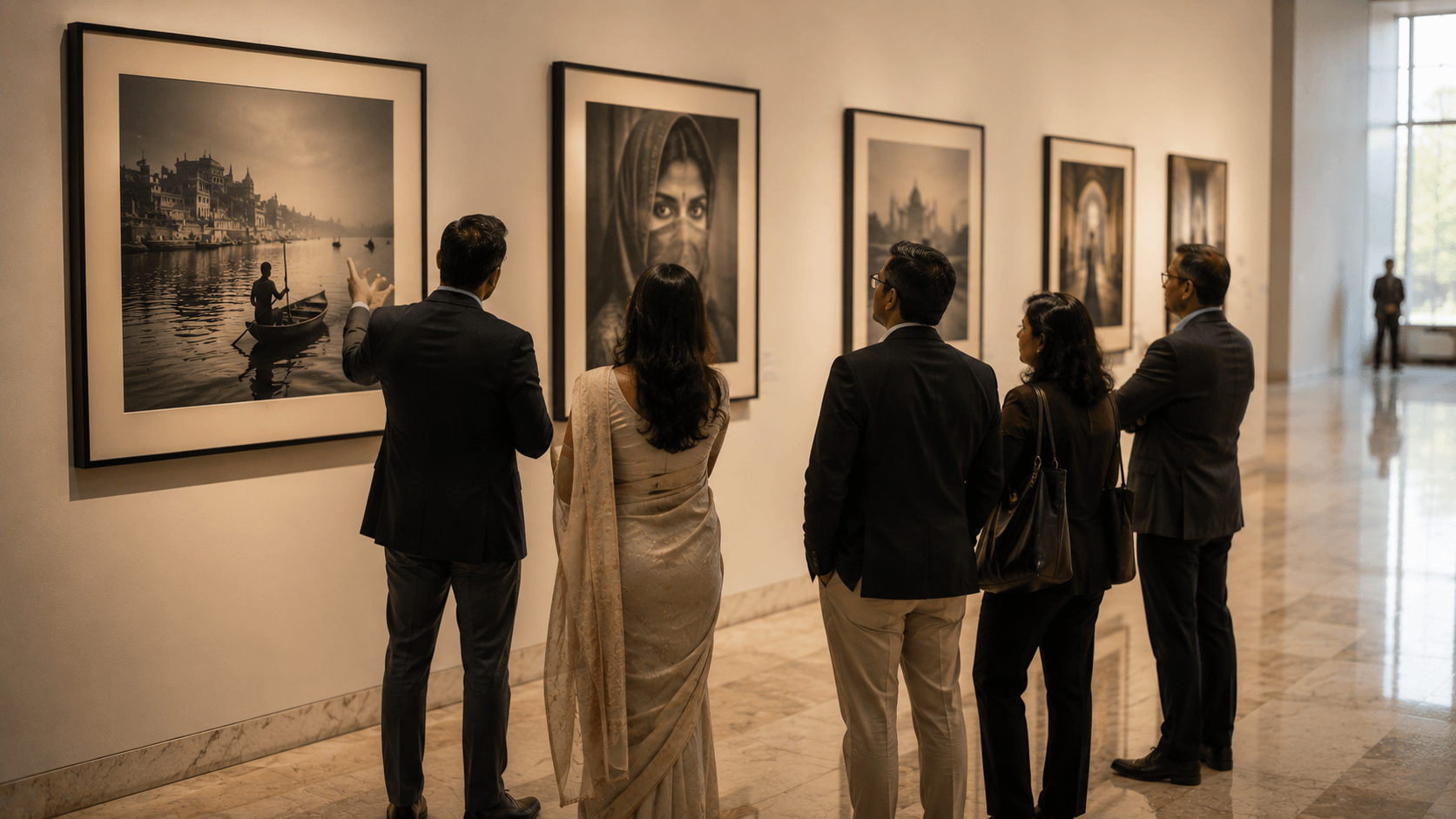
It was here that Edition 1 of ZiiP Foundation’s Women in Photography (WiP) Project made its international debut: 25 contemporary Indian women photographers, exhibited in the home of a woman who spent her life proving the camera belonged in women’s hands. This August, that exhibition completes its journey home — opening at the National Gallery of Modern Art (NGMA), Mumbai.

Two venues, two countries, one cohort of artists. The route was not incidental. It is the strategy.

What an Exhibition Actually Does for a Career

To audiences, an exhibition is an event. To a photographer, it is career infrastructure. A serious exhibition delivers, at minimum, five things no amount of online presence replicates:

  • Validation: a curated selection is a professional judgment that this work matters — one that other curators, editors, and grant panels read as a signal.
  • Physical presence: photographs at exhibition scale, in sequence, in a room, produce an encounter no screen can — and it is in that encounter that collectors and commissioners decide.
  • Press and record: exhibitions generate reviews, interviews, and catalogue entries — the citable paper trail that careers are built on.
  • Network: openings gather the field’s decision-makers in one room, with the work as the introduction.
  • Confidence: the psychological shift in an artist who has seen their work honored on serious walls is real, and it changes what they attempt next.

Why Start Abroad?

A recurring pattern in the art world, and not only India’s: domestic institutions often recognize their own artists more readily once international ones have. By debuting Edition 1 at Farleys — within a legacy explicitly tied to women’s photography — the project positioned its photographers inside global discourse from the first day. International context became part of each artist’s story: exhibited in the UK is a line that travels.

The choice of venue carried its own argument. Showing contemporary Indian women photographers in Lee Miller’s home placed them in a lineage — not as a regional showcase, but as the next chapter of a history that belongs to them too.

Why the Homecoming Matters More

If the international debut builds context, the homecoming builds consequence. NGMA Mumbai is among India’s most significant institutions for modern and contemporary art; its walls confer a recognition that reverberates through the Indian art ecosystem — galleries, collectors, commissioning editors, and academies all take note.

And there is a wider audience that matters just as much: the public. As we wrote in closing the gender gap behind the camera, every woman photographer honored at a national institution recalibrates what audiences — including the youngest ones — believe is possible. A teenager who sees 25 Indian women on NGMA’s walls this August inherits a different sense of who photography belongs to.

The Compounding Effect

The early outcomes from Edition 1 illustrate how exhibition value compounds: international exhibition invitations for participating photographers, grant support for new bodies of work, and a published book that keeps circulating the work in rooms the artists have never entered. Each outcome generates the next — visibility becomes validation, validation becomes opportunity, opportunity becomes track record.

This compounding is precisely what the story behind ZiiP Foundation has always been about: converting five decades of curatorial networks into career-changing platforms for the artists who need them most.

Join Us at NGMA — and in What Comes Next

If you are in Mumbai this August, we warmly invite you to experience the exhibition at NGMA. If you are a photographer, the Edition 2 open call for the 2027-28 cycle is open. And if you lead an organization that wants its name attached to journeys like this one — from a Sussex farmhouse to a national institution, and onward to wherever these 25 careers go next — we invite you to partner with ZiiP Foundation. The next journey is already being planned.

Frequently Asked Questions

The exhibition presents Edition 1 of ZiiP Foundation’s Women in Photography Project — 25 Indian women photographers — opening at the National Gallery of Modern Art, Mumbai in August 2026, following its international debut at Farleys House & Gallery in the UK.

Debuting internationally placed the photographers within global photography discourse from the outset — at Farleys House & Gallery, the former home of pioneering photographer Lee Miller — before the homecoming exhibition converts that international context into recognition within India’s own institutions.

Serious exhibitions provide professional validation, press coverage and catalogue records, direct access to curators and collectors, and the confidence that shapes an artist’s next ambitions. These effects compound: exhibition credits lead to invitations, grants, and further exhibitions.

Lee Miller (1907-1977) was an American photographer and war correspondent whose fearless career made her a landmark figure in women’s photographic history. Farleys House, her former home in East Sussex, England, now houses a gallery dedicated to that legacy — making it a symbolically powerful debut venue for an exhibition of women photographers.

Yes. ZiiP Foundation partners with funders and CSR programs to stage international and Indian exhibitions, publish editions, and support photographer development. Details are available via the contact page on ziipfoundation.org.

Half the world’s stories are seen through a lens that women rarely get to hold. One project is working to change that — 25 photographers at a time.

Walk through the history of photography and count the celebrated names. Now count the women among them. The imbalance you’ll find is not a reflection of talent — it is a reflection of access: to exhibitions, to publishing, to mentorship, to the rooms where reputations are made.

This gap matters far beyond fairness to individual artists. Photography shapes how societies see themselves; when women are underrepresented behind the camera, half of humanity’s perspective is missing from the visual record. The picture of our time is, quite literally, incomplete.

The Gap, Plainly Stated

Across the global photography industry, women remain significantly underrepresented in gallery representation, festival line-ups, photobook publishing, editorial assignments, and awards — despite entering photography education in equal or greater numbers than men. The pattern is consistent: women enter the field, but the field’s gatekeeping structures don’t carry them upward at the same rate.

In India, these global patterns are compounded by additional constraints — fewer institutional platforms, limited mentorship networks, and social expectations that make sustained careers in the arts harder for women to pursue. The result is a deep pool of exceptional Indian women photographers with far too few stages to stand on.

Diagnosing the problem is easy. The harder question is: what actually moves the needle?

What Actually Changes Careers: The WiP Model

The Women in Photography (WiP) Project — ZiiP Foundation’s flagship initiative — is built on a simple conviction: careers change when work is seen, in the right places, by the right people. Each edition selects 25 Indian women photographers and puts their work through a three-stage engine designed to compound visibility into opportunity.

Stage 1: International exhibition

Edition 1 opened at Farleys House & Gallery in England — the former home of Lee Miller, one of history’s most fearless women photographers, and a venue steeped in exactly the legacy this project honors. Opening internationally is a deliberate strategy: it positions the photographers within global discourse from day one, placing their work before international curators, collectors, and press.

Stage 2: The homecoming

The exhibition then travels home — to the National Gallery of Modern Art, Mumbai, opening in August 2026. The homecoming matters as much as the international debut. It tells Indian audiences, institutions, and aspiring photographers that these artists belong on the country’s most prestigious walls — and it converts international validation into domestic institutional recognition.

Stage 3: The permanent record

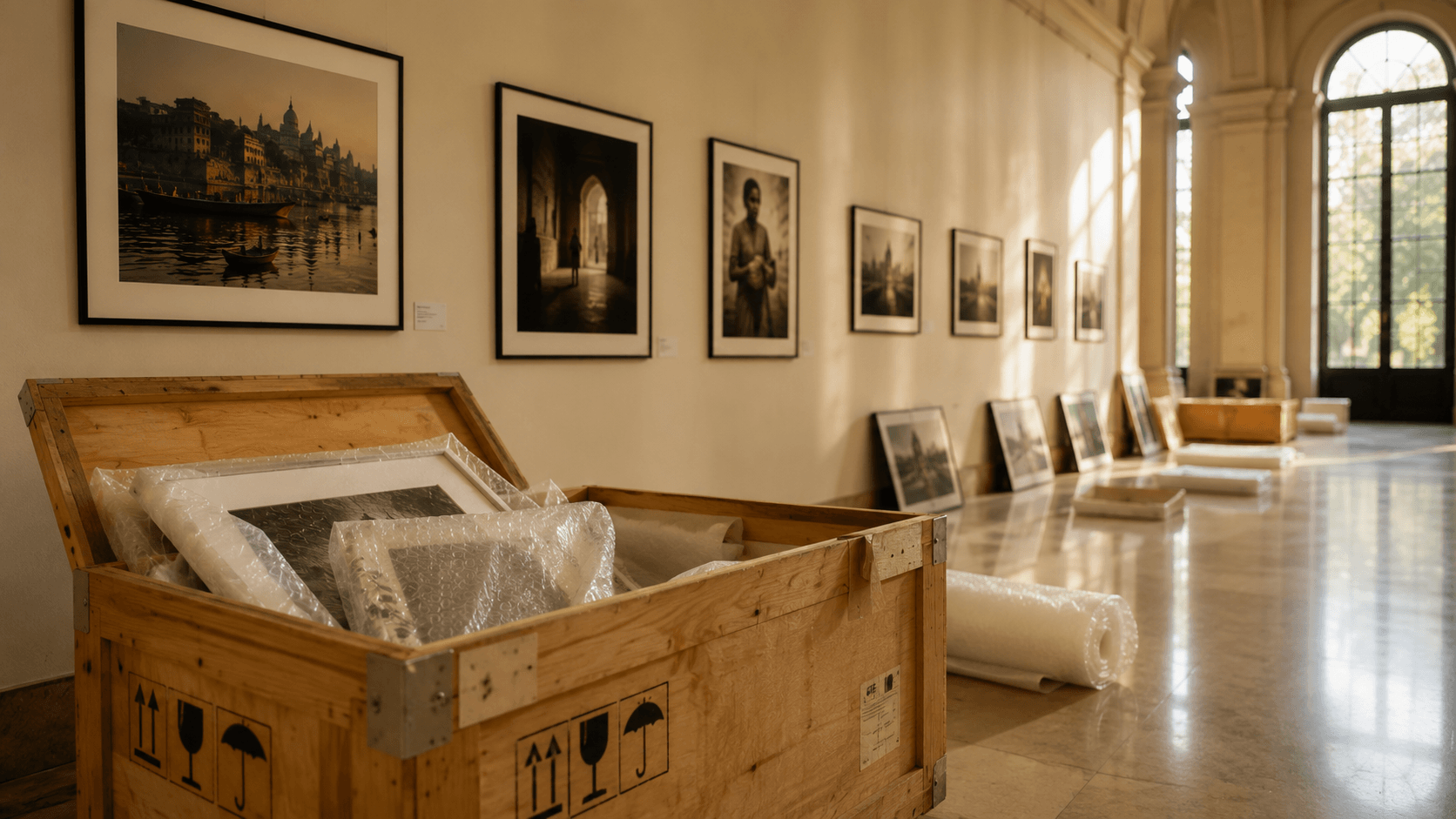
Exhibitions close; books remain. Each edition is documented in a published volume of the photographers’ work — a permanent, citable, collectible record that continues opening doors long after the walls are cleared. In a field where photobooks are career currency, publication is not an afterthought; it is infrastructure.

The Early Evidence

Edition 1 is already generating the outcomes the model was designed for: participating photographers have received invitations to exhibit internationally, and grant support for new bodies of work has begun to follow. Each such outcome validates the underlying thesis — that the barrier was never talent, but access to the platforms where talent becomes reputation.

And the engine is already turning over: the Edition 2 open call is live, inviting the next cohort of Indian women photographers for the 2027-28 cycle. Edition by edition, the project is building something larger than any single exhibition — a growing, visible, published community of Indian women photographers that the industry can no longer overlook.

Why This Is Bigger Than Photography

We’ve written before about photography as a tool for social change: images shape public perception, and whoever holds the camera decides which stories exist. Correcting the gender imbalance behind the lens therefore isn’t only an arts issue — it is a representation issue with consequences for how India is seen and how Indian women see themselves.

Every woman photographer exhibited at an institution like NGMA is also a signal — to a teenage girl with a camera phone, to a family weighing a daughter’s career in the arts, to an editor deciding whom to commission — that this path exists and leads somewhere.

Be Part of the Correction

The gender gap behind the camera took generations to build; closing it takes deliberate, sustained platforms — international exhibitions, national institutions, publications, and the funding that makes them possible. If your organization’s goals include gender equity, cultural exchange, or supporting women in photography, we invite you to partner with ZiiP Foundation for the editions ahead. There is a wall, a page, and a future career with your name on it.

Frequently Asked Questions

The Women in Photography Project is ZiiP Foundation’s flagship initiative addressing the underrepresentation of women in photography. Each edition selects 25 Indian women photographers and presents their work through an international exhibition, a homecoming exhibition in India, and a published book.

Women enter photography education in strong numbers but face structural barriers to advancement: less gallery representation, fewer festival and publishing opportunities, limited mentorship networks, and — particularly in India — fewer institutional platforms and social constraints on sustained arts careers. The gap reflects access, not talent.

Edition 1 opened internationally at Farleys House & Gallery in England — the former home of photographer Lee Miller — and travels to the National Gallery of Modern Art (NGMA), Mumbai, opening in August 2026.

The Edition 2 open call for the 2027-28 cycle is live on the ZiiP Foundation website, inviting applications from Indian women photographers across genres and career stages.

Funders and CSR programs can support future editions — including exhibitions, publications, and photographer development — by partnering with ZiiP Foundation through the contact page on ziipfoundation.org.