


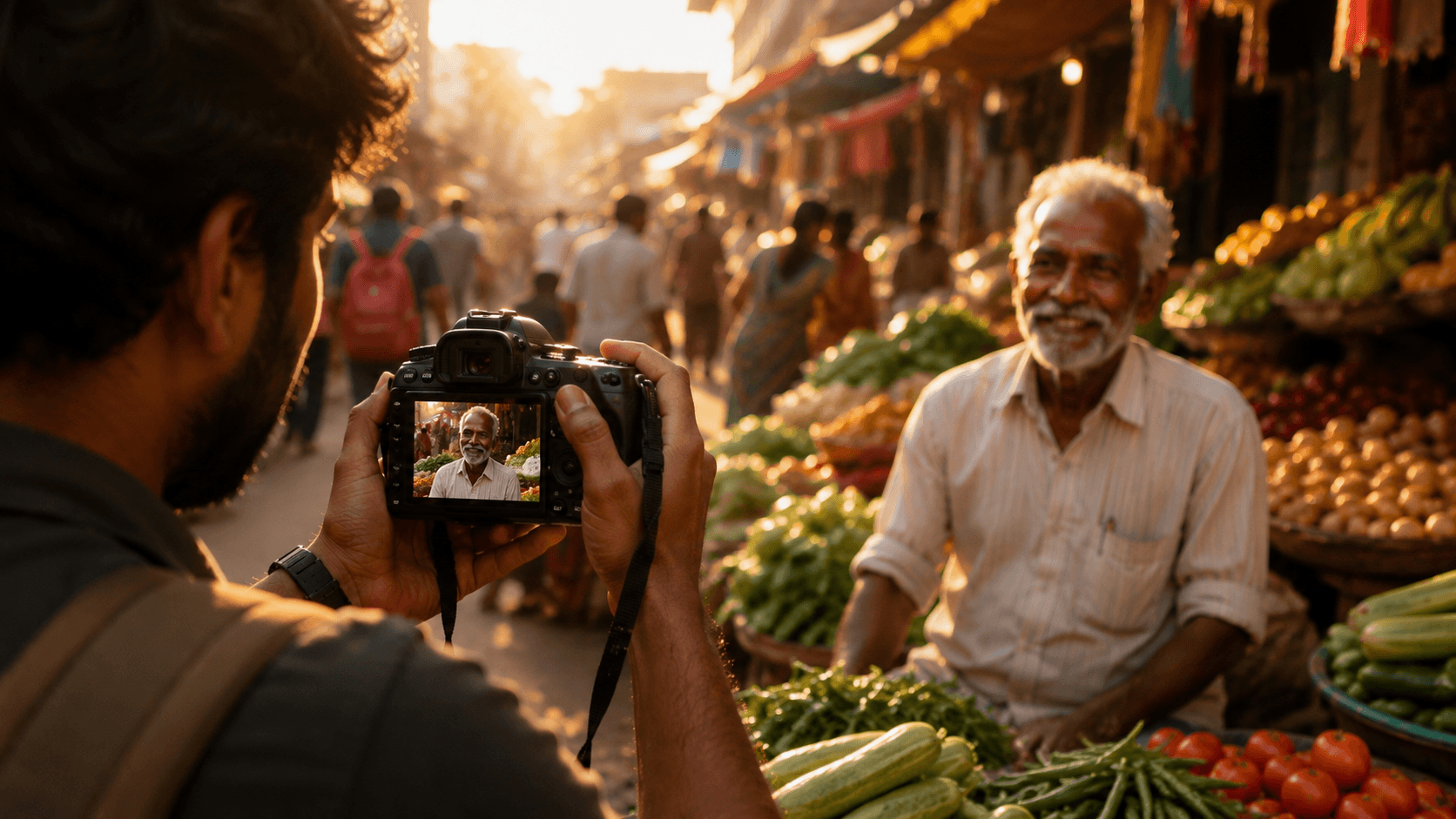
Words inform. Images convince. A closer look at why photography remains the most direct route to public empathy — and how a foundation puts that power to work.

Think of any social issue that has moved you — genuinely moved you, not merely informed you. The odds are overwhelming that what you remember is not a statistic or a headline. It is an image.

This is not sentimentality; it is how human perception works. And it is the entire premise on which ZiiP Foundation is built: that photography is not just an art form, but a language that speaks across cultures and borders — often more fluently than words ever can.

Why Images Move Us When Words Don't

Research in cognitive psychology consistently shows that humans process visual information faster than text, remember it longer, and respond to it more emotionally. A photograph collapses distance: the viewer stops reading about a person and starts looking at one.

Three qualities give photography its unique persuasive force:

  • Immediacy. An image requires no translation, no literacy, no shared language. It crosses linguistic and cultural borders instantly — which is precisely why photography matters so much for a country as multilingual as India.
  • Evidence. A photograph asserts that something happened, that someone exists. It converts abstract issues — displacement, labor, gender inequity — into undeniable, specific human presence.
  • Memory. Public consciousness is an album, not a library. Movements, disasters, and triumphs are remembered through their defining photographs long after the accompanying reports are forgotten.

A Short History of Images That Changed Minds

The historical record is unambiguous: photography has repeatedly altered the course of public opinion and policy. Nineteenth- and twentieth-century social reformers used the camera to document child labor and urban poverty, putting faces to conditions that reports had failed to make real — and legislation followed. War photography brought distant conflicts into living rooms and reshaped public support. Environmental photography — from the first images of Earth taken from space to contemporary climate documentation — fundamentally changed how humanity pictures its own fragility.

India’s own photographic tradition carries this same current: generations of photographers have documented the nation’s social realities, cultural transformations, and everyday dignity, building a visual archive that continues to shape how India sees itself and how the world sees India.

The lesson across all of it: when the goal is to shift perception at scale, few instruments rival the photograph.

From Single Images to Sustained Change

A viral image can spark attention; sustained change needs infrastructure. Attention fades unless institutions convert it into understanding, dialogue, and opportunity. That conversion is the work of exhibitions, education, publishing, and discourse — the connective tissue between a powerful photograph and a changed society.

This is where a photography foundation earns its place. The story behind ZiiP Foundation is five decades of building exactly this infrastructure — and today it operates across four reinforcing fronts:

Changing who gets to tell the story

Perception is shaped as much by who stands behind the camera as by what stands in front of it. The Women in Photography (WiP) Project exists because the visual record of our time is incomplete when women’s perspectives are underrepresented in it. By exhibiting 25 Indian women photographers internationally and at home, the project doesn’t just showcase work — it corrects the lens itself.

Changing who learns the language

If photography is a language, access to it is a literacy issue. The Young Lens Project teaches that language to teenagers in government schools — young people whose communities are frequently photographed but rarely photographing. Handing them the camera converts subjects into authors.

Changing how the public encounters images

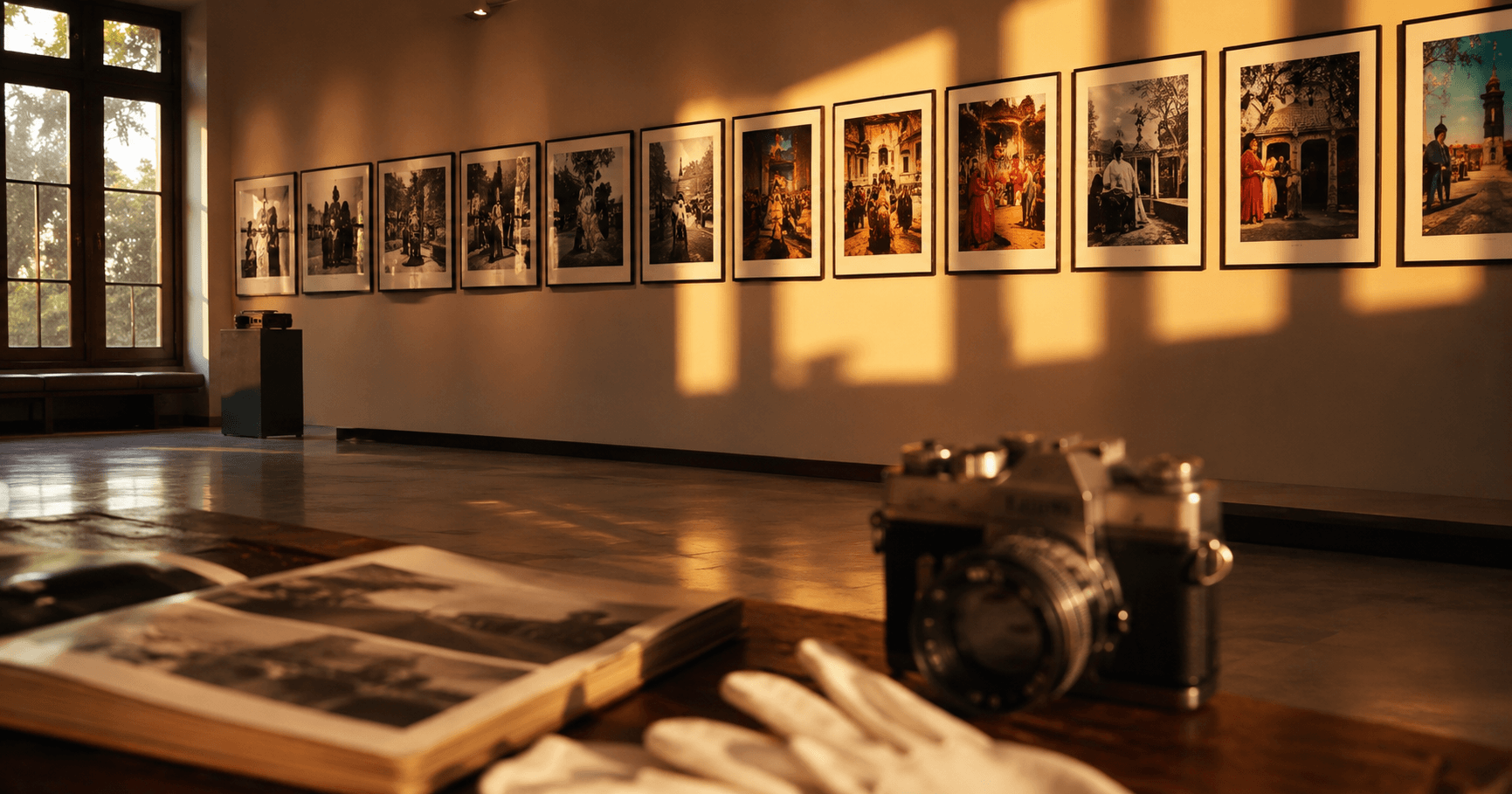
Exhibitions remain among the most powerful perception-shifting tools available — a curated encounter that slows viewers down and asks them to truly look. We’ve written before about how exhibitions influence public perception; from Farleys House & Gallery in the UK to the National Gallery of Modern Art in Mumbai, our exhibitions are designed as public conversations, not just displays.

Changing how seriously we think about images

In an era of AI-generated visuals, algorithmic feeds, and image saturation, the ethics of photography — consent, representation, manipulation, ownership — have never mattered more. Through the ZiiP Folder symposium and the ZiiP Journal, we convene photographers, scholars, and cultural leaders to examine not just what images show, but what they do.

The Multiplier: Why This Is a Cause Worth Funding

For funders and CSR leaders, photography can seem like a ‘soft’ cause next to healthcare or education. The evidence suggests the opposite: it is a multiplier for every other cause.

Every social program that needs public support needs public perception on its side — and perception is built visually. Invest in the photography ecosystem and you invest in the storytelling capacity of an entire society: in who gets seen, who gets heard, and which issues the public comes to care about. Add to that the direct outcomes — creative careers for young people, international recognition for underrepresented artists, cultural exchange between India and the world — and the case is anything but soft.

Seeing Is the First Step to Changing

Social change begins when people see differently. Photography is how societies learn to see. If your organization believes in that equation — whether your priorities are education, gender equity, youth opportunity, or cultural exchange — we invite you to partner with us and put the most persuasive medium humanity has ever invented to work for good.
Frequently Asked Questions

Photography drives social change by making abstract issues concrete and emotionally immediate. Images cross language barriers, serve as visual evidence, and lodge in public memory — shifting perception, building empathy, and creating the public will that policy change depends on.

A photograph communicates without translation or literacy. Viewers from different cultures and languages can understand and feel the same image, which makes photography uniquely suited to cross-cultural dialogue — a core reason ZiiP Foundation calls photography a language that speaks across borders.

ZiiP Foundation works on four fronts: diversifying who tells visual stories (the Women in Photography Project), democratizing access to photography education (The Young Lens Project), staging public exhibitions in India and abroad, and convening critical discourse through the ZiiP Folder symposium and ZiiP Journal.

Yes. Photography programs deliver measurable outcomes in education, skill development, gender equity, and cultural preservation — areas that align with common CSR priorities and the UN Sustainable Development Goals. Funders partner with ZiiP Foundation to support exhibitions, education initiatives, and public programs.

Documentary photography pairs authenticity with human specificity: real people, real circumstances, no staging. That credibility is what allows a single strong documentary image to reframe how the public understands an entire issue.

How a lifetime inside the global photography ecosystem became India’s dedicated photography foundation — and why the next chapter matters for everyone who believes images can change the world.

Every institution has an origin story. Ours spans nearly fifty years, five continents, and one unshakeable conviction: that photography is not merely an art form, but a language — one that speaks across cultures and borders, and one in which India’s voice deserves to be heard far more loudly than it has been.

This is the story of the Zalor India International Photography (ZiiP) Foundation: where we come from, what we have built, and where we are going.

The Problem We Set Out to Solve

India has one of the richest photographic histories in the world. From the earliest studio traditions of the nineteenth century to the documentary masters of the twentieth and the boundary-pushing contemporary artists of today, Indian photography has never lacked talent, vision, or stories worth telling.

What it has lacked is infrastructure.

Conversations around photography in India remain fragmented — scattered across academia, galleries, and industry, with too few bridges between them. Emerging photographers struggle to find platforms for critical debate, professional networks, and international opportunities. And despite this rich heritage, India remains underrepresented in global photography discourse, institutions, and markets.

ZiiP Foundation exists to close that gap. As a not-for-profit organization dedicated to the advancement, education, and promotion of photography, we build the platforms — exhibitions, symposiums, education programs, publications, and partnerships — that connect Indian photography with the world, and bring the world’s photography conversation to India.

Five Decades of Groundwork

A foundation is only as credible as the experience behind it. ZiiP’s roots go back nearly five decades of active engagement with the international photography ecosystem, led by our founder, curator and photography historian Dr. Niyatee Shinde.

A Seat at Photography's Most Respected Tables

In 2022, Dr. Shinde became the first Indian woman to serve on the jury of the Hasselblad Award — widely regarded as one of the most prestigious honors in world photography. That jury went on to recognize Indian photographer Dayanita Singh as the Hasselblad Award 2022 laureate, a landmark moment for the global standing of Indian photography.

This was not an isolated engagement. Since 1988, ZiiP has represented India at Oracle, the leading international conference for photography professionals, curators, and museum specialists — and hosted the Oracle Conference in India in 2003, bringing global curatorial discourse to Indian soil.

Carrying Indian Photography to the World

Over the years, the Foundation has curated and presented Indian photography at major international festivals and exhibitions:

  • Pingyao International Photography Festival, China — curating and representing the India Pavilion in 2005 and 2019, one of Asia’s most significant photography platforms.
  • View India, Landskrona Foto Festival, Sweden (2019) — a co-curated exhibition of contemporary Indian photography that placed India’s social and cultural narratives before European audiences.
  • Big Cities Exhibition, BRICS Urban Forum, Moscow (2024) — showcasing three distinguished Indian photographers alongside an artist residency program for cultural exchange.
  • FestFoto Porto Alegre, Brazil (2024) — jury participation at one of Latin America’s most recognized photography festivals.

Each engagement built the networks, credibility, and curatorial depth that now power the Foundation’s programs.

What ZiiP Foundation Does Today

Everything we do maps to five mission pillars: support and promotion, education and empowerment, research and development, community and collaboration, and advocacy and awareness. In practice, that mission takes shape through a connected ecosystem of initiatives.

The Women in Photography (WiP) Project

Our flagship initiative confronts one of the field’s most persistent inequities: the underrepresentation of women behind the camera. The Women in Photography (WiP) Project brings together 25 Indian women photographers per edition through a unique dual-exhibition model — an international showcase followed by a homecoming exhibition in India.

Edition 1 opened at the historic Farleys House & Gallery in England — the former home of pioneering photographer Lee Miller — and travels to the National Gallery of Modern Art, Mumbai in August 2026, accompanied by a published book documenting the photographers’ work. The international exposure has already opened doors for participating photographers, from exhibition invitations to grants for new work — a direct expression of our commitment to supporting women in photography.

The Young Lens Project

Access to photography education should not depend on privilege. The Young Lens Project introduces photography as a tool for storytelling, self-expression, and a viable career pathway to teenagers from government schools — delivered as a zero-cost program combining hands-on workshops, mentorship by young professional photographers, portfolio development, and public exhibitions of student work.

ZiiP Folder: A Symposium for Serious Discourse

India has festivals and India has galleries — but it has never had a dedicated, curated intellectual platform for photography discourse. ZiiP Folder, our two-day symposium debuting in Mumbai, changes that: an intimate gathering of approximately one hundred photographers, scholars, curators, and cultural leaders examining photography’s relationship with ethics, representation, technology, and society.

Journal, Workshops, and Photo Fora

Around these flagship programs runs a continuous engine of engagement: the ZiiP Journal, weekend workshops and lectures for professionals and enthusiasts, and Photo Fora — our program of expert webinars and one-on-one portfolio reviews with internationally renowned photography experts, which has helped participants go on to present work at festivals such as Pingyao and Landskrona. Together, these embody our belief in the power of visual storytelling and in photography grants and career development as engines of lasting change.

The Pipeline: From First Camera to World Stage

What makes ZiiP distinctive is not any single program — it is how they connect.

A teenager in a government school picks up a camera through the Young Lens Project. A developing photographer sharpens their craft through workshops and Photo Fora. An emerging woman artist gains international exhibition and publication through WiP. And the entire field grows through the discourse of the ZiiP Folder symposium and the pages of the ZiiP Journal.

Access. Skill. Recognition. Discourse. Four rungs of one ladder — a complete pipeline for photography talent, built in India and connected to the world.

Why This Matters Now

The world has never consumed more images, yet has rarely thought less about them. Questions of representation, consent, authenticity, and the ethics of image-making — sharpened by AI and social media — demand serious institutions that can hold serious conversations.

At the same time, India’s creative economy is expanding rapidly, and photography sits at the intersection of art, media, technology, and livelihood. Investing in photography today means investing in cultural representation, in education, in gender equity, and in the creative careers of the next generation.

That is the work ZiiP Foundation was built for. And it is work we cannot do alone.

Join Us in the Next Chapter

Five decades built the foundation. The next decade builds the institution. If you are a funder, CSR leader, or cultural organization whose goals align with education, equity, and cultural exchange, we invite you to partner with ZiiP Foundation — and help write the next chapter of Indian photography’s story.

Frequently Asked Questions

The Zalor India International Photography (ZiiP) Foundation is an Indian not-for-profit organization dedicated to the advancement, education, and promotion of photography. It runs exhibitions, education programs, symposiums, publications, and workshops that connect Indian photography with global audiences.

ZiiP Foundation is led by Dr. Niyatee Shinde, a curator and photography historian with nearly five decades of experience in the international photography ecosystem, including serving as the first Indian woman on the Hasselblad Award jury.

The Foundation’s key initiatives are the Women in Photography (WiP) Project, The Young Lens Project (photography education for government-school students), the ZiiP Folder symposium, the ZiiP Journal, and ongoing workshops and Photo Fora portfolio-review programs.

ZiiP Foundation works with corporate partners, CSR programs, cultural institutions, and philanthropic funders to deliver exhibitions, education programs, and public discourse platforms. Interested organizations can reach out through the Foundation’s website.

ZiiP Foundation is based in India and champions Indian photography, but its outlook and operations are international — with exhibitions, juries, and collaborations across the UK, Sweden, China, Brazil, Russia, and beyond.